7th Edition of
Chemistry World Conference
June 21-23, 2027 | Rome, Italy

Statistical Mechanics
Statistical Mechanics Is A Branch Of Physics Which Deals With The Macroscopic Behavior Of A System Based On Its Microscopic Properties Such As The Energy, Number Of Particles And Volume. It Is A Powerful Tool Used To Understand The Behavior Of Many-Body Systems At Equilibrium. Statistical Mechanics Can Be Used To Model Phenomena At Both The Macroscopic And Microscopic Levels. At The Macroscopic Level, Statistical Mechanics Is Used To Explain Thermodynamic Properties Such As Temperature, Pressure, And Entropy. Furthermore, It Can Be Used To Explain Phenomena Like The Specific Heat Capacity Of Solids And Liquids And The Joule-Thomson Effect In Gases. At The Microscopic Level, Statistical Mechanics Is Useful For Studying The Behavior Of Particles In A System. It Is Used To Explain The Behavior Of Ideal Gases, Photon Gases, And Electrons In Conductors, As Well As The Behavior Of Ions In Solutions And Lattices Of Atoms. Statistical Mechanics Is Also An Important Tool For Studying The Behavior Of Systems Far From Equilibrium. It Can Be Used To Model The Evolution Of Complex Systems, From The Growth Of Crystals To The Formation Of Galaxy Clusters. This Approach Can Help Us Understand Phases Of Matter, From The Ordered Structures Of Solids And Liquids To The Disordered Behavior Of Gases. In Addition, Statistical Mechanics Is An Important Tool In The Study Of Phase Transitions And Critical Phenomena. In Conclusion, Statistical Mechanics Is A Powerful Tool Which Can Be Used To Understand The Behavior Of Many Different Kinds Of Systems, Both At Equilibrium And Far From Equilibrium. It Is An Important Tool In Both Theoretical And Experimental Physics, Used To Explain Phenomena On The Microscopic And Macroscopic Scales.

Brian Blagg
University of Notre Dame, United States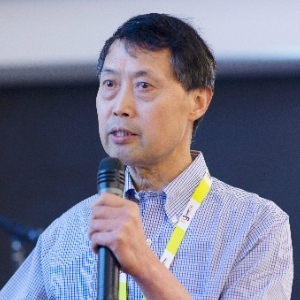
Yong Xiao Wang
Albany Medical College, United States
Thomas J Webster
Brown University, United States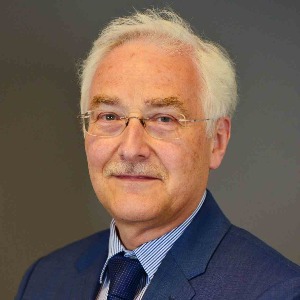
Klaus Radunsky
National Standardization International, Austria
Siegmund Reissmann
Friedrich Schiller University, Germany
Alessia Corami
Aix-Marseille University, Italy
Guy Patchronik
Ariel University, IsraelSubmit your abstract Today


Title : Fighting antibiotic resistance: Eliminating implant infections in humans without antibiotics
Thomas J Webster, Brown University, United States
Title : Novel polymer-mediated therapeutic options for chronic obstructive pulmonary disease
Yong Xiao Wang, Albany Medical College, United States
Title : Turning problems into opportunities via small molecule design
Brian Blagg, University of Notre Dame, United States
Title : Durable surface-confined metal-terpyridine architectures for electrochromic applications
Olena Zenkina, Ontario Tech University, Canada
Title : Advances in plasma-based waste treatment
Hossam A Gabbar, Ontario Tech University, Canada
Title : Application of the Michaelis-Menten formalism to hydrocracking-related reactions and analysis of the features of the reactors
Orchidea Maria Lecian, Sapienza University of Rome, Italy