7th Edition of
Chemistry World Conference
June 21-23, 2027 | Rome, Italy
Physical Chemistry
Molecular interactions, reaction dynamics, and thermodynamic principles define the foundation of chemical transformations and material behavior. Quantum mechanics and spectroscopy unravel atomic structures, enabling precise control over chemical reactions and material properties. Advances in computational simulations refine predictions of molecular behavior, accelerating discoveries in catalysis, nanotechnology, and energy storage. Surface chemistry innovations enhance sensor technologies, coatings, and heterogeneous catalysis, impacting industries from pharmaceuticals to renewable energy. Electrochemical studies drive progress in fuel cells and battery technologies, optimizing efficiency and sustainability. As interdisciplinary approaches expand, physical chemistry continues to bridge theoretical models with practical applications, shaping advancements in materials science, environmental chemistry, and energy solutions for a rapidly evolving technological landscape.

Brian Blagg
University of Notre Dame, United States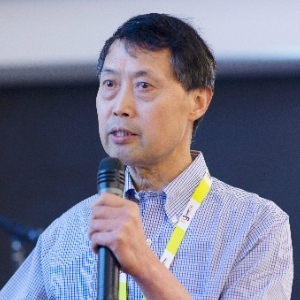
Yong Xiao Wang
Albany Medical College, United States
Thomas J Webster
Brown University, United States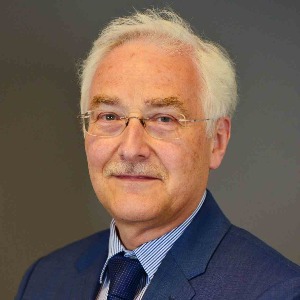
Klaus Radunsky
National Standardization International, Austria
Siegmund Reissmann
Friedrich Schiller University, Germany
Alessia Corami
Aix-Marseille University, Italy
Guy Patchronik
Ariel University, IsraelSubmit your abstract Today


Title : Fighting antibiotic resistance: Eliminating implant infections in humans without antibiotics
Thomas J Webster, Brown University, United States
Title : Novel polymer-mediated therapeutic options for chronic obstructive pulmonary disease
Yong Xiao Wang, Albany Medical College, United States
Title : Turning problems into opportunities via small molecule design
Brian Blagg, University of Notre Dame, United States
Title : Durable surface-confined metal-terpyridine architectures for electrochromic applications
Olena Zenkina, Ontario Tech University, Canada
Title : Advances in plasma-based waste treatment
Hossam A Gabbar, Ontario Tech University, Canada
Title : Application of the Michaelis-Menten formalism to hydrocracking-related reactions and analysis of the features of the reactors
Orchidea Maria Lecian, Sapienza University of Rome, Italy