
/**/
HYBRID EVENT: Join us in person in Rome, Italy or attend virtually from anywhere.

7th Edition of

Chemistry World Conference

June 21-23, 2027 | Rome, Italy

Chemistry 2024

The design and development of isoform-selective inhibitors of Hsp90

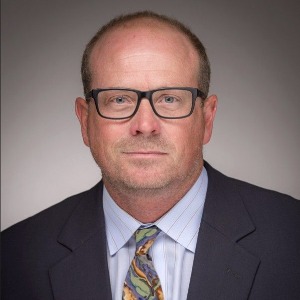
Speaker at Chemistry World Conference 2024 - Brian Blagg
University of Notre Dame, United States
Title : The design and development of isoform-selective inhibitors of Hsp90

Abstract:

The Hsp90 molecular chaperone is composed of four family members that play key roles in the folding of nascent polypeptides as well as the rematuration of misfolded proteins. The cytostolic chaperones, Hsp90a and Hspd0b, contribute to tumorogenesis and represent attractive targets for the treatment of cancer. Grp94 is the ER-localized paralog that is responsible for the trafficking of proteins, such as myocillin, and consequently represents an ideal target for the treatment of primary open angle glaucoma. In contrast to the inhibition of Hsp90, the molecular chaperones can be overexpressed to exhibit neuroprotective activity in animal models of neuropathy. While the Hspg0 isoforms play key roles in various diseases, the N-terminal ATP-binding site is >85% identical, making the development of selective inhibitors challenging. In this presentation, methods used to develop isoform-selective inhibitors will be disclosed as well as some of the early preclinical studies that are being pursued for translation.

Biography:

Brian Blagg is the Charles Huisking Professor of Chemistry and Biochemistry and Director of the WarrenFamily Research Center for Drug Discovery and Development at the University of Notre Dame. After earning a B.A. in Chemistry and Environmental Studies at Sonoma State University, and his Ph.D. in Organic Chemistry from the University of Utah (Dale Poulter), he received an NIH Postdoctoral Fellowship and performed research at The Scripps Research Institute with Dale Boger. Blagg started his independent career in medicinal chemistry at The University of Kansas in 2002. In the Fall of 2017, he moved to The University of Notre Dame wherein his lab continues to focus on chaperone proteins and protein folding in relation to cancer and neurodegeneration.

Watsapp